Physical Address
304 North Cardinal St.
Dorchester Center, MA 02124
Physical Address
304 North Cardinal St.
Dorchester Center, MA 02124

In 2026, the digital market has developed a “filter” for generic AI art. That waxy, over-saturated look isn’t just an aesthetic fail—it’s brand erosion. If your thumbnails and blog headers look like everyone else’s, you’ve already become invisible to your audience.
Most creators are stuck in a frustrating cycle of “prompt-and-pray,” losing hours trying to bridge the gap between their vision and the final pixels. You don’t need better luck; you need a professional workflow. We spent 15 hours stress-testing the titans—Midjourney v7 and Flux.1—to reveal which engine actually scales a content empire and which is just a cost trap.
Creating the perfect ‘Base Layer’ with these tools is essential, but professional art direction doesn’t exist in a vacuum. If you are building a faceless channel or a digital brand, your aesthetic ‘soul’ must be paired with high-end narration. After deciding between Midjourney and Flux for your visuals, explore our guide on the Best AI Voice Generators for 2026 to complete your audio-visual tech stack.
At Like2Byte, we don’t believe in “cherry-picked” prompts. To compare Midjourney v7 and Flux.1, we designed a testing framework based on the actual needs of the 2026 creator economy. Our evaluation focused on three primary pillars: Brand Consistency (can it replicate the same character across 10 scenes?), Typographic Accuracy (can it handle complex YouTube titles?), and Economic Efficiency (how much does it cost to generate a month’s worth of content?).
We ran several identical prompts through both models, ranging from “Hyper-realistic tech review thumbnails” to “Abstract blog headers for finance articles.” We also evaluated the “Friction Factor”—the time spent from the first prompt to the final, usable asset. Our tests were conducted using Midjourney’s Pro Plan and Flux.1 Pro via the Fal.ai API to ensure we were comparing “Best-in-Class” performance. We ignored “Alpha” features that weren’t stable, focusing solely on production-ready outputs that you can use to make money today.
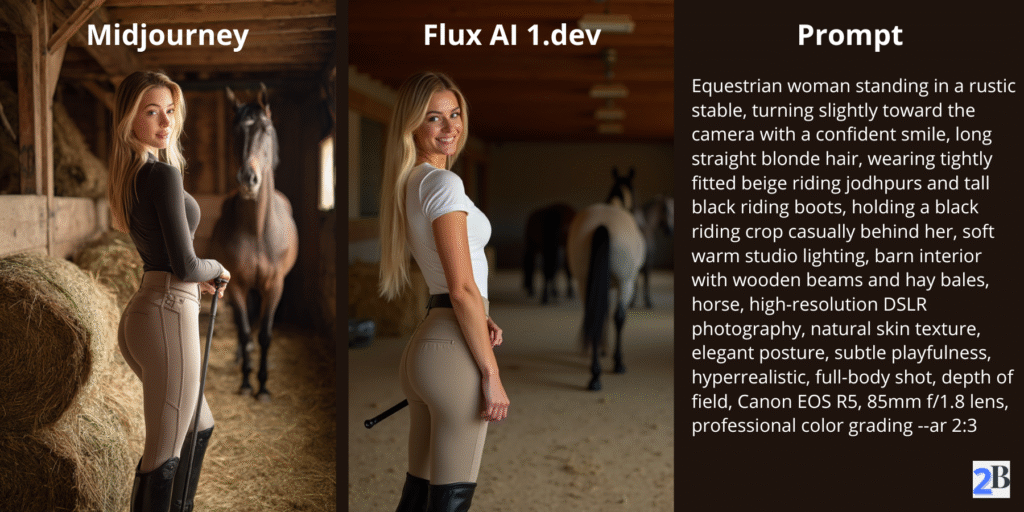
In this head-to-head test, Midjourney (left) leaned into a cinematic, high-contrast aesthetic with a heavy focus on foreground textures like the hay bales. Flux AI 1.dev (center), however, provided a more expansive environment with better spatial awareness of the horses in the background. While Midjourney feels like a movie still, Flux feels like a high-end commercial photograph.
Already decided to switch? Don’t get lost in the transition. Check out our technical Flux.1 vs Midjourney Parameter Mapping Guide to translate your favorite commands instantly.
Beyond replicating reality, the true power of modern AI lies in its ability to generate diverse artistic visions. We tested the models with prompts designed to push their creative boundaries, from dramatic nature photography to highly stylized, conceptual art.
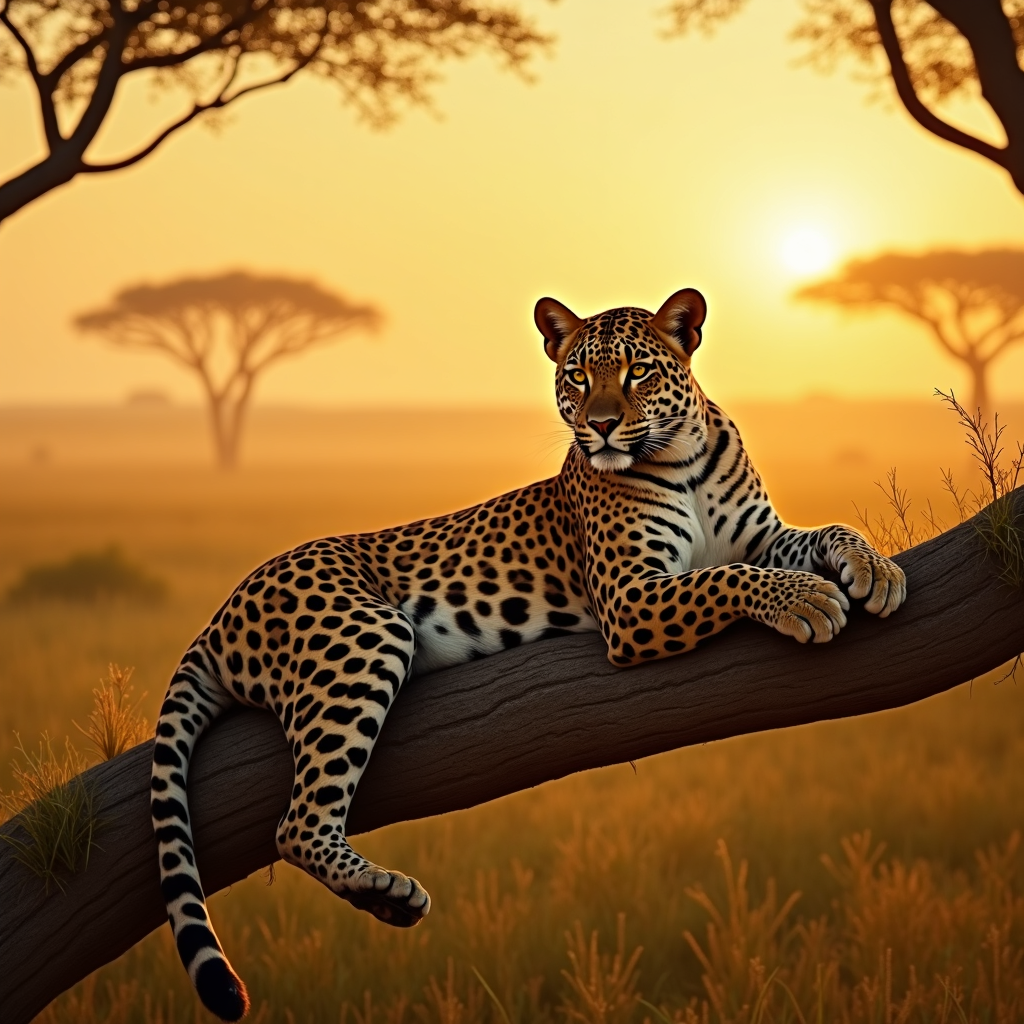
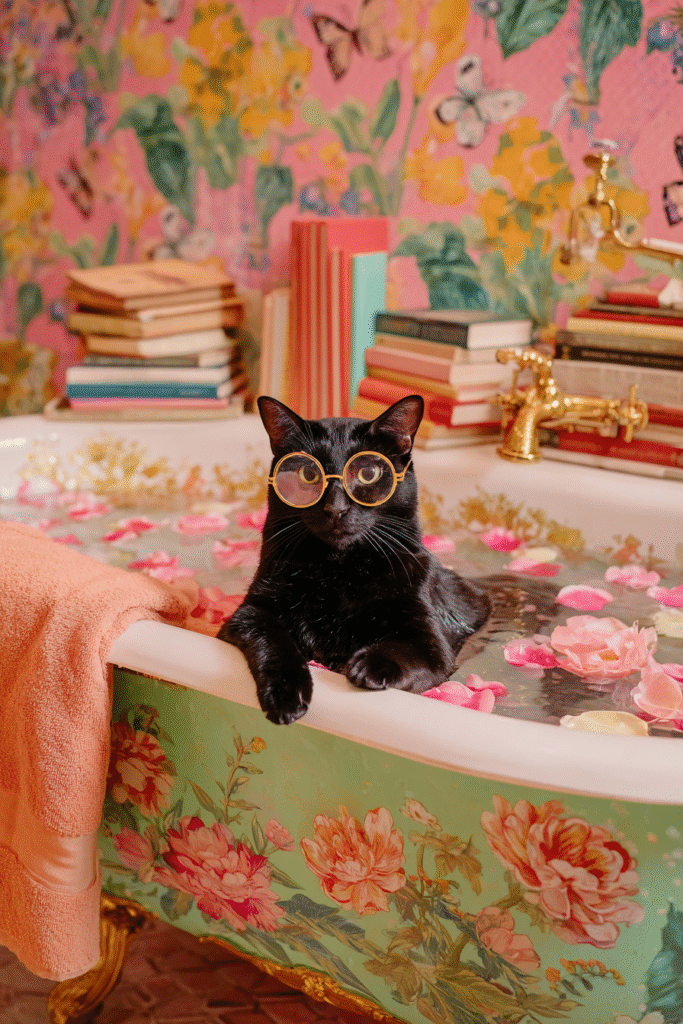
These two images demonstrate that the battle in 2026 is not just about who makes the most realistic photo, but who offers the widest creative breadth.
The leopard image (Figure 2) is a prime example of ‘Cinematic Realism’. The AI captured not just the animal, but the atmosphere of the ‘golden hour,’ with dramatic lighting and a composition worthy of a high-budget nature documentary.
In contrast, the cat in the bathtub image (Figure 3) showcases the power of ‘Whimsical Creativity’. Here, the AI is not trying to mimic reality but rather execute a fantastical, stylized concept. The consistency of the floral theme, the soft color palette, and the charming details (like the glasses) create an editorial scene that feels like it came straight out of a design magazine.
For content creators, this means you are not boxed into a single style. The same tool that generates your realistic tech review thumbnail can also create dreamlike, conceptual art for your lifestyle blog banner.
Is Midjourney v7 still the best AI image generator? Yes, for creators who prioritize “vibe,” lighting, and cinematic composition over raw technical control, Midjourney v7 remains the undisputed leader in 2026 due to its unmatched aesthetic “soul” and new native video features.
Midjourney v7 has doubled down on its “Personalization” engine. Instead of just giving you a random beautiful image, it now learns your specific style preferences based on your past ratings. For a YouTuber, this is a goldmine. It means your thumbnails will have a consistent “look” that your audience can recognize instantly in their feed. This version also sees the full integration of the --sref (Style Reference) and --cref (Character Reference) commands, which are now 40% more accurate than in v6.
The real reason many are sticking with Midjourney in 2026 is its “Base Layer” strategy. Midjourney v7 isn’t just an image tool anymore; it’s the starting point for their native video model. You can generate a character, refine it, and animate it within the same interface with perfect temporal consistency. If you are in the YouTube Automation niche, this ecosystem saves you from jumping between three different AI tools just to get a 5-second clip.
Why should you use Flux.1 instead of Midjourney? Flux.1 is the superior choice for professionals who require perfect typography, complex prompt adherence (e.g., specific object counts), and the ability to automate image generation via API for large-scale blog operations.
Flux.1, developed by Black Forest Labs, has become the “industry standard” for precision. While Midjourney sometimes takes “creative liberties,” Flux follows your prompt like a surgical assistant. If you ask for a “neon sign that says ‘LIKE2BYTE’ in 1980s retro font,” Flux gives you exactly that—no typos, no weird artifacts. This makes it the go-to tool for Online Income enthusiasts who are building niche sites that require hundreds of specific, text-heavy infographics and headers.
Unlike Midjourney’s “walled garden” (which still largely relies on their website or Discord), Flux.1 is built for the open web. In 2026, the Flux.1 Kontext model allows for massive context windows, meaning you can feed it an entire blog post, and it will generate 5 relevant images that perfectly match the article’s subsections. For those looking into AI Productivity Tools, Flux’s ability to be integrated into Zapier or Make.com is a massive advantage over Midjourney.
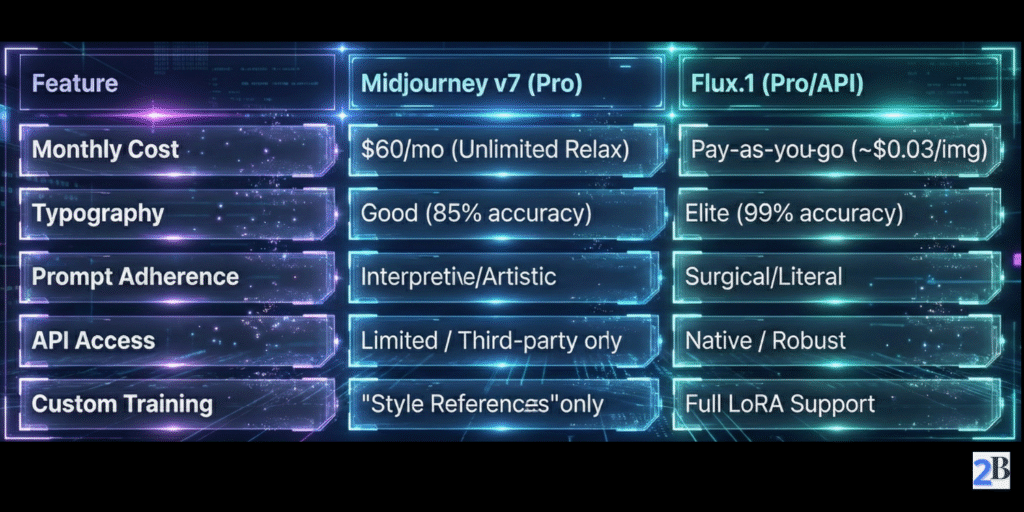
In 2026, speed is money. Here is how the two giants stack up in terms of the “Business of AI.”
| Feature | Midjourney v7 (Pro) | Flux.1 (Pro/API) |
|---|---|---|
| Monthly Cost | $60/mo (Unlimited Relax) | Pay-as-you-go (~$0.03/img) |
| Typography | Good (85% accuracy) | Elite (99% accuracy) |
| Prompt Adherence | Interpretive/Artistic | Surgical/Literal |
| API Access | Limited / Third-party only | Native / Robust |
| Custom Training | “Style References” only | Full LoRA Support |
In the professional landscape of 2026, the question isn’t “Which one is better?” but rather “How do I chain them together?” Top-tier YouTube automation agencies and high-traffic editorial teams have moved toward a hybrid pipeline that extracts the aesthetic DNA of Midjourney and the surgical precision of Flux.1.
This approach solves the biggest headache in AI content creation: Character Consistency. While Midjourney v7 is incredible at creating a specific “look,” maintaining that exact face across 50 different blog images can be challenging. By using Midjourney to establish the “Art Direction” and then using Flux.1 (via LoRA injection) to maintain the character’s structural integrity, creators are achieving a level of visual storytelling that was impossible just a year ago.
--sref (Style Reference) is still the gold standard for global aesthetics. Use MJ to generate your hero environments and cinematic backgrounds.Search engines and social algorithms in 2026 are increasingly sophisticated at identifying “Visual Authority.” When a user lands on your blog and sees a consistent art style—rather than a disjointed mix of different AI styles—it signals Professionalism and Trust. This reduces bounce rates and increases dwell time, which are critical indirect SEO signals.
Furthermore, by using Flux.1 to embed specific, keyword-rich text directly into your images (like signs, labels, or infographics), you are creating “original data” that Google’s Vision AI can index. An image that actually says what the article is about is worth ten times more in Image Search than a generic stock photo with an alt-tag. This is the “hidden” SEO advantage of the Flux-Midjourney hybrid era.
Pro Tip for YouTube Creators: Use Midjourney v7 to generate your “Faceless Avatar” in multiple poses. Then, train a specialized Flux LoRA on those outputs. This allows you to place your “character” in any specific scenario—holding a specific product, pointing at a specific chart—with 100% reliability for your thumbnails.
Moving your entire production workflow from Midjourney to Flux (or vice-versa) isn’t just about learning new prompts. It’s about your data and your “learned” style. Before you switch, consider this checklist:
--ar, --stylize).If you are a YouTube Creator focused on high-end storytelling, Midjourney v7 is your winner. Its ability to create “cinematic magic” and its new integrated video pipeline makes it an unbeatable creative partner.
However, if you are a Digital Marketer or Professional Blogger running multiple sites, Flux.1 wins on ROI. The precision of its text and the ability to automate generations via API makes it the more efficient “business” tool.
Q: Is Midjourney v7 better than Flux.1 for realistic photos?
A: It depends on the “flavor” of realism. Midjourney v7 excels at “Cinematic Realism”—images that look like they are from a high-budget movie. Flux.1 excels at “Raw Realism”—images that look like a candid photo taken on an iPhone. For marketing, Flux usually looks more authentic.
Q: Can I use Flux.1 for free?
A: Yes, if you have a powerful enough PC (at least 24GB VRAM), you can run the “Flux.1 Schnell” or “Dev” versions locally for free. Midjourney v7 is strictly a paid, cloud-based service.
Q: Does Flux.1 handle text better than Midjourney?
A: Absolutely. Flux.1 is currently the world leader in AI typography. It can handle long sentences and specific fonts with almost zero errors, whereas Midjourney v7 still struggles with complex or lengthy text strings.
Q: Which tool is better for YouTube Thumbnails?
A: Midjourney is better for the “background” and “character” of a thumbnail due to its lighting. However, many pros use Midjourney for the art and Flux.1 (or Photoshop) for the text elements to get the best of both worlds.
Q: Is Flux.1 safe for commercial use?
A: Yes, the Flux.1 Pro and Dev versions (when used through reputable providers like Fal.ai or via a Pro license) allow for commercial usage. Always check the latest terms of service as they evolve in 2026.
Q: How do I get Midjourney v7 results in Flux?
A: You can use “LoRAs” (Low-Rank Adaptations). The Flux community has created thousands of downloadable “styles” that mimic the Midjourney v7 aesthetic, giving you MJ beauty with Flux precision.
