Physical Address
304 North Cardinal St.
Dorchester Center, MA 02124
Physical Address
304 North Cardinal St.
Dorchester Center, MA 02124


You’ve seen the GoHighLevel pricing page. GoHighLevel starts at $97/month before you’ve sent a single email or built your first funnel. For a small business doing $2,000 to $5,000 a month, that’s a meaningful line item — especially when you’re not sure yet whether you need a CRM, SMS automation, or any of the other features packed into that price.
That’s the moment people find Systeme.io. And their first reaction is usually suspicion: something this cheap — or free — can’t actually replace the stack of tools you’re paying for right now. This review tells you whether that suspicion is warranted.
Systeme.io is an all-in-one marketing platform used by 500,000+ entrepreneurs. It combines sales funnels, email marketing, online course hosting, affiliate program management, and blogging into one dashboard. The free plan includes 2,000 contacts, unlimited email sending, and 0% transaction fees — with no credit card required. Paid plans start at $17/month as of May 2025.
| Who this is for | Small business owners and solopreneurs who are currently paying $100–$250/month across separate tools (email platform, landing page builder, course host) and want to know if systeme.io can replace that stack — and whether it holds up against GoHighLevel as a free alternative. |
| What you’ll learn | Exactly what systeme.io can and cannot do, a real stack cost comparison, a direct comparison with GoHighLevel, and a clear set of conditions for when the free plan is enough — and when it isn’t. |
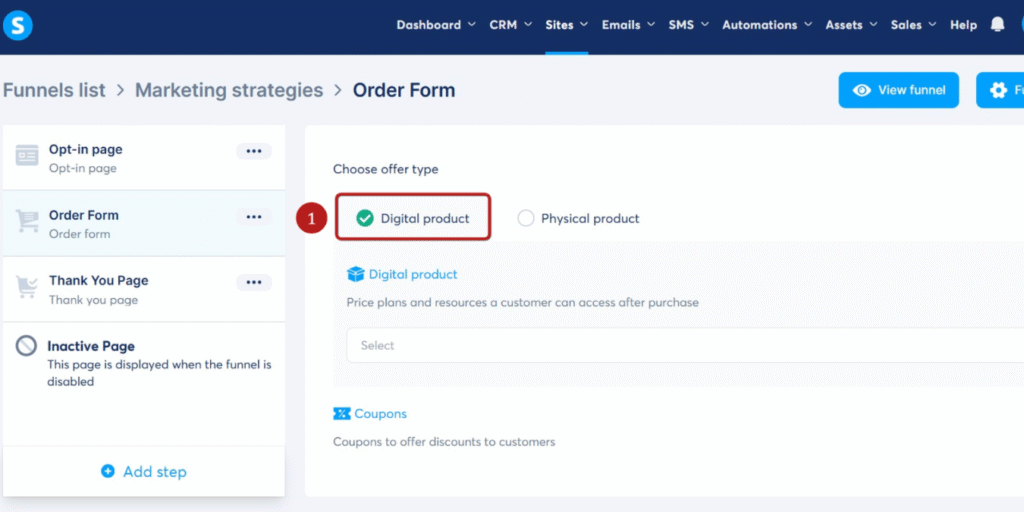
Before running a cost comparison, you need to know what you’re comparing. Systeme.io covers eight core functions. Here’s what each one does — and where each one stops.
In May 2025, Systeme.io dropped the Startup plan from $27/month to $17/month. Most review articles still show the old price. The current pricing structure looks like this:
| Plan | Monthly Price | Contacts | Funnels | Courses | Best For |
|---|---|---|---|---|---|
| Free | $0 forever | 2,000 | 3 | 1 | Validating a business idea or selling one digital product with under 2,000 leads |
| Startup | $17/mo ($170/yr) | 5,000 | 10 | 5 | Solo service provider or coach actively growing their list and running multiple offers |
| Webinar | $47/mo ($470/yr) | 10,000 | 50 | 20 | Businesses using evergreen webinars as a lead gen or sales mechanism |
| Unlimited | $97/mo ($828/yr) | Unlimited | Unlimited | Unlimited | Established businesses with large lists, complex funnel architectures, or free migration needs |
*Pricing current as of March 2026. Annual billing saves approximately 30% per paid tier. Verify current pricing at systeme.io/pricing before committing.*
The most compelling case for Systeme.io isn’t that it’s cheap — it’s that it eliminates the integration tax. Most small businesses assembling their own stack pay for four to six tools that were never designed to talk to each other, then pay again for Zapier to connect them.
We ran the numbers on a typical small business setup — a solo coach or consultant running an email list, selling a course, and building a simple sales funnel:
| Tool | Function | Monthly Cost (est.) |
|---|---|---|
| Mailchimp (Essentials, 2,500 contacts) | Email marketing | $45 |
| Thinkific (Basic plan) | Course hosting | $74 |
| ClickFunnels (Basic) | Sales funnels + landing pages | $97 |
| Zapier (Starter) | Integration glue | $19 |
| Total | $235/month | |
| Systeme.io Startup | All of the above | $17/month |
*Costs estimated from published pricing as of early 2026. Actual costs vary by plan tier and usage. This comparison assumes a solo business at the entry-level paid tier of each tool.*
The monthly difference is $218. Over a year, that’s $2,616. For a business doing $3,000/month in revenue, that’s a material percentage of gross margin being paid to maintain tool integrations.
The trade-off is real: the individual tools are deeper in their specific function. Mailchimp’s segmentation is more sophisticated. Thinkific’s course experience is more polished. ClickFunnels has more split-testing capability. The question is whether those marginal improvements justify the cost and the integration overhead at your current stage.
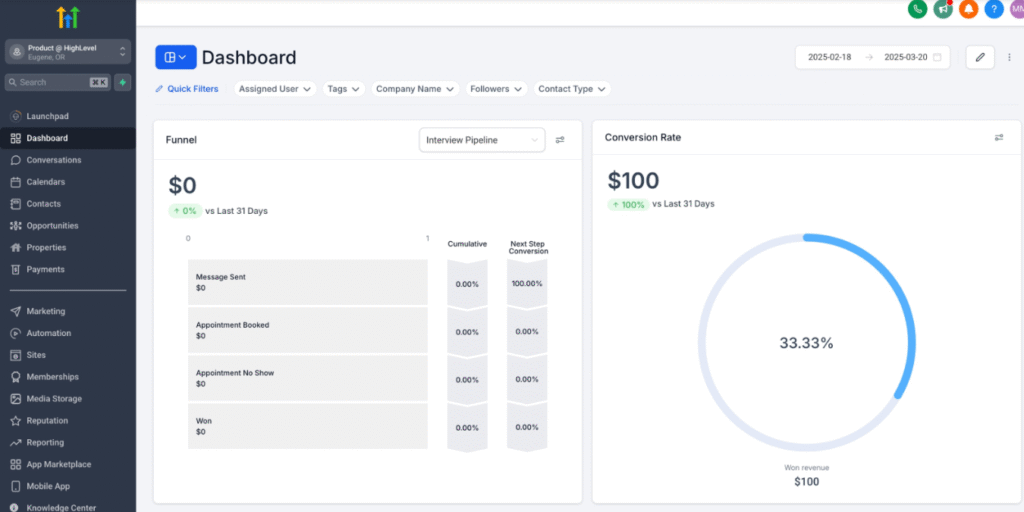
The title of this review calls Systeme.io a free GoHighLevel alternative. That framing needs unpacking — because the two platforms are built for different business models, and calling one an “alternative” to the other obscures where each one actually wins.
| Feature | Systeme.io | GoHighLevel |
|---|---|---|
| Starting price | Free (forever) | $97/month (no free plan) |
| CRM | Not yet (on roadmap) | Full CRM with pipeline stages |
| SMS automation | No | Yes (usage-based cost adds $50–$150/mo) |
| Automation complexity | Basic (rules-based, no if/else) | Advanced (conditional branching, behavior triggers) |
| Course hosting | Yes (unlimited students, all plans) | Yes (basic) |
| Affiliate management | Yes (built-in, all plans) | Limited |
| Multi-client / agency | No | Yes (designed for this) |
| Email deliverability | Reliable | Variable (reported issues in user reviews) |
| Learning curve | Low | Steep |
| Transaction fees | 0% | 0% (but usage costs for SMS/calls) |
In practice, the comparison breaks down like this: Systeme.io wins for anyone building and selling a digital product — courses, memberships, coaching programs, downloadables. GoHighLevel wins for any business model that depends on follow-up sequences across multiple channels — local service businesses, real estate, healthcare, trades, or any business where SMS plus CRM pipeline is the core of the sales process.
The honest framing is this: systeme.io is a GoHighLevel alternative for a specific type of small business. If your revenue model is digital products and email marketing, it’s a genuine replacement at a fraction of the cost. If your revenue model is service-based and depends on CRM pipeline management or SMS follow-up, systeme.io is not a GoHighLevel alternative — it’s a different tool for a different job.
After testing the platform across multiple accounts, the limitations fall into two categories: things that are genuinely missing and things that are present but shallow. Both matter — and neither disqualifies the platform for its target audience.
Most reviews answer this question with vague categories — “entrepreneurs,” “course creators,” “beginners.” That framing makes it hard to know whether you’re in the right place. Here’s a more specific answer.
The right fit: You’re running a one-to-five person business. Your revenue comes from digital products, coaching, or a service with a simple sales funnel. You’re currently paying $80 to $200 per month across tools that weren’t built to work together. You don’t need CRM pipeline management, SMS automation, or multi-client architecture. You want to spend your tech budget on growth, not integration maintenance.
Not the right fit: You’re an agency managing multiple clients. Your sales process depends on CRM pipeline stages or a sales team following up on deals. SMS is core to your conversion strategy — home services, real estate, healthcare, trades. You need advanced conditional automation. You’re doing high-volume e-commerce with inventory management requirements.
Yes. The free plan is not a trial — it has no expiration date, no credit card required, and no downgrade event that removes features after 14 or 30 days. It includes 2,000 contacts, 3 sales funnels, 1 course with unlimited students, 1 blog, unlimited email sends, and 0% transaction fees. The limits are functional, not artificial — you’re not being throttled toward an upgrade on a timer.
Yes — for specific types of small businesses. It’s well-suited for digital product businesses, coaching practices, and service businesses with simple funnel architectures. It’s less suited for businesses that need CRM pipeline management, SMS automation, or agency-style multi-client setups. The key question is whether your revenue model runs on email and digital products or on multi-channel follow-up and CRM workflows.
The core difference is architecture: Systeme.io is built for solopreneurs and small digital businesses selling products and courses. GoHighLevel is built for agencies and service businesses that need CRM pipeline management, SMS automation, and multi-client architecture. Systeme.io starts free; GoHighLevel starts at $97/month with additional usage-based costs for SMS and calls. If you don’t need CRM or SMS, you’re likely paying for features you’ll never use on GoHighLevel.
No — not yet. Systeme.io has contact management with tagging and basic segmentation, but no CRM pipeline stages, deal tracking, or activity log. Adding a CRM is listed as a feature request on the platform’s public roadmap (roadmap.systeme.io), but no release date has been announced as of early 2026. If a true CRM is essential to your business, this is a hard blocker until that feature ships.
The most significant limitations are: no CRM pipeline, no SMS or calling, no conditional automation logic (if/else branching), no native third-party integrations outside of payment processors, no mobile app for course members, and limited design customization in the funnel builder. These are real constraints — but they only become blockers for businesses whose core process depends on them. For the majority of digital product businesses, none of these limitations are disqualifying.
Yes, within the contact and funnel limits. A solo coach or course creator with under 2,000 email subscribers, one product, and one core funnel can run their entire online business operation on the free plan indefinitely — including email marketing, course hosting, affiliate management, and payment processing. When those limits become constraints, the Startup upgrade at $17/month is the natural next step.
Upgrade to GoHighLevel when your business depends on one or more of the following: CRM pipeline management for a sales team, SMS follow-up sequences as a core conversion mechanism, multi-client management across separate accounts, or conditional automation logic that responds to specific user behaviors. Until those conditions apply, the cost difference between $17/month and $97/month is hard to justify on features alone.
Last updated: March 2026
