Physical Address
304 North Cardinal St.
Dorchester Center, MA 02124
Physical Address
304 North Cardinal St.
Dorchester Center, MA 02124

AI voice generators have become one of the most powerful tools in the modern creator stack. Whether you are building a faceless YouTube channel, producing explainer videos for clients, or developing full e-learning programs, synthetic voices can dramatically reduce cost and production time.
For years, Play.ht and Murf AI were frequently compared as two strong — but very different — approaches to AI narration. However, following Play.ht’s shutdown and acquisition-related changes, this comparison now serves a different purpose: helping creators understand where Play.ht fit, why Murf AI remains relevant, and which modern alternatives best replace Play.ht today.
At Like2Byte, we test AI narration tools inside real creator and business workflows because the core question hasn’t changed: “Which platform actually works when you’re producing content every week?” Historically, Play.ht behaved like a flexible, creator-focused text-to-speech engine for long-form narration, while Murf AI functioned more like a studio designed for teams producing structured training and marketing content.
In this 2026 guide, we revisit that comparison through a modern lens — breaking down Murf AI’s current strengths, highlighting why Play.ht was widely adopted, and mapping the best Play.ht replacements for long-form narration, e-learning, and creator workflows.
If you’re exploring the landscape of AI narration tools, start with our guide to the Top 10 Best AI Voice Generators for 2026.
🚀 TL;DR — Which AI Voice Tool Should You Use in 2026?
👉 Play.ht previously filled many of these roles, but is now discontinued. Detailed breakdowns and migration guidance are explained below.
Instead of judging these platforms only by their feature lists, we focused on how they behave in real production scenarios. We created sample projects that mirror what creators and teams actually build: long-form courses, internal training videos, YouTube explainers, and podcast-style episodes.
Because Play.ht is no longer active in 2026, our testing treats it as a baseline reference — reflecting how it historically performed in long-form narration workflows — while Murf AI was evaluated as a currently available, production-ready platform. For each scenario, we looked at setup time, narration quality, editing friction, and how well each approach fit into an existing workflow.
We also paid close attention to collaboration and handoff. In our tests, we simulated both independent creators working alone and small teams where subject-matter experts, editors, and managers all touch the same project. This revealed where Play.ht historically felt lighter and more creator-centric, and where Murf AI’s studio-style approach continues to make a measurable difference for teams.
| Scenario | What We Tested | Play.ht (Legacy Reference) | Murf AI (Active Platform) |
|---|---|---|---|
| Long-form course | Multi-module e-learning script with lessons and recap sections | Stable voice and easy pronunciation tuning | Studio workflow for aligning narration with slides |
| Podcast-style episode | Scripted “talking-head” style audio show | Natural pacing and consistent delivery over 20–30 minutes | Simple to turn narration into a video asset |
| Corporate training deck | Policy or product training synced to slides | Fast generation and script-level adjustments | Timeline controls and collaboration for team review |
| Team production | Multiple people editing and approving the same project | Clean workflow for solo creators or small teams | Built-in roles, comments, and shared studio environment |
Keep this testing context in mind as you read the comparison below. Our conclusions are based on real production behavior — treating Play.ht as a historical benchmark and Murf AI as a currently deployable solution — not just on theoretical pros and cons.
| Feature | Play.ht (Legacy Reference) | Murf AI (Active Platform) |
|---|---|---|
| Voice Realism | ★★★★☆ Natural, clear narration | ★★★★☆ Natural, business-friendly tone |
| Best For | Creators, podcasts, long-form narration (historical use) | Corporate videos, training & e-learning |
| Emotional Range | Moderate to high, depending on voice | Moderate, controlled for brand safety |
| Long-Form Stability | Excellent for audiobooks & extended courses | Excellent for training series & onboarding |
| Editing & Studio Tools | Strong TTS editor, SSML & script-level controls | Full studio with timelines & team collaboration |
| Ideal User Profile | Individual creators & small teams (pre-2026) | Business, L&D, and corporate teams |
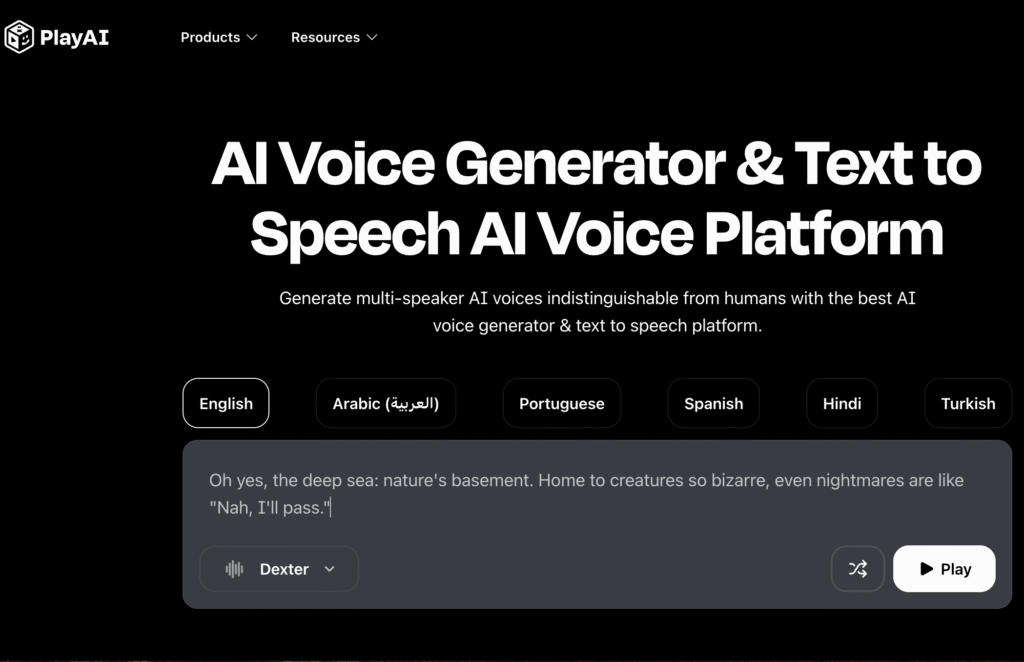
Play.ht was one of the early AI text-to-speech platforms that helped popularize long-form AI narration. It built its reputation on stable voices, flexible pronunciation control, and reliability across extended scripts.
It was widely adopted by creators producing audiobooks, podcast-style narration, online courses, and educational content — use cases where consistency over 20–60+ minutes mattered more than short-form expressiveness.
By the time of its shutdown, Play.ht was best known for being a creator-friendly long-form TTS engine, rather than a full production studio or enterprise platform.
Long-form stability
Voices maintained consistent tone and pacing across extended scripts, making Play.ht suitable for audiobooks, courses, and documentary-style narration.
Pronunciation control
Creators could fine-tune technical terms, names, and pacing, reducing rework in recurring and jargon-heavy projects.
Creator-first workflow
Focused on narration quality rather than full video production, which appealed to solo creators and small teams using external editing tools.
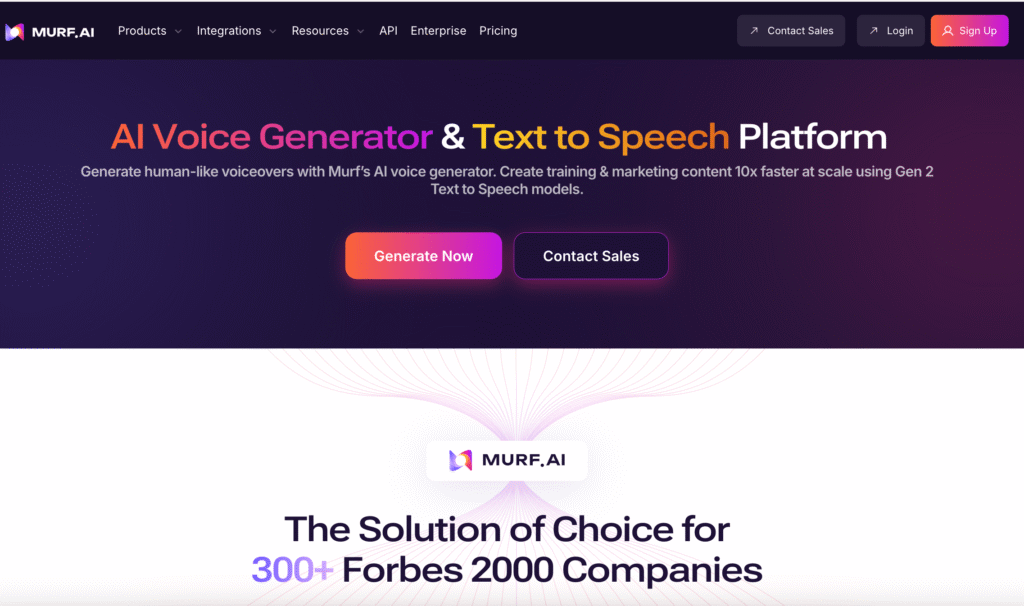
Murf AI
is an AI voice and video studio built primarily for
business, training, and structured communication workflows.
While Play.ht was adopted early by individual creators focused on long-form narration,
Murf AI evolved as a production environment for teams that need consistency,
collaboration, and brand-safe delivery at scale.
This makes Murf AI a natural alternative for former Play.ht users whose needs extend beyond narration alone — especially when projects involve slides, visuals, multiple reviewers, or recurring corporate content.
Typical Murf AI users include learning & development teams, HR departments, SaaS marketing teams, agencies, and internal communications units. Instead of acting only as a text-to-speech engine, Murf provides a browser-based studio where voiceovers, slides, visuals, music, and timing are managed in one place.
In our hands-on tests, Murf AI felt less like a standalone voice generator and more like a lightweight production suite — which is exactly what many teams need when replacing traditional voice actors and agency-driven workflows.
Murf AI is optimized for environments where
clarity, consistency, and professionalism
matter more than dramatic storytelling. Its voices are calibrated for policy explainers,
product onboarding, internal updates, and customer education.
Example: A company launching a new product can use Murf AI to produce multilingual explainer videos for customers, onboarding content for sales teams, and internal training modules — all with a consistent, brand-safe voice.
One of Murf AI’s strongest differentiators is its integrated studio. Scripts can be broken into segments, voices assigned per section, and narration precisely aligned with slides, visuals, and timing.
Team members can collaborate directly inside the project — allowing subject-matter experts, editors, and managers to review, comment, and approve content without external handoffs or fragmented tools.
Murf AI prioritizes business-appropriate voice profiles: clear, articulate, neutral, and non-controversial. While these voices may lack the emotional range of storytelling-focused platforms, they excel in trust, clarity, and message control.
For organizations that value tone consistency and governance, this professional focus often outweighs raw expressiveness — making Murf AI a reliable replacement when moving away from creator-first narration tools like Play.ht.
Before its shutdown, Play.ht was known for a technical architecture optimized around
long-form text-to-speech stability. Its engines prioritized consistent
pacing, clear pronunciation,
and granular control over how text was delivered across large scripts.
This design made Play.ht particularly effective for audiobooks, multi-module courses, and serialized narration. Once a voice and pronunciation profile was tuned, creators could reuse it across dozens of episodes or lessons without noticeable drift.
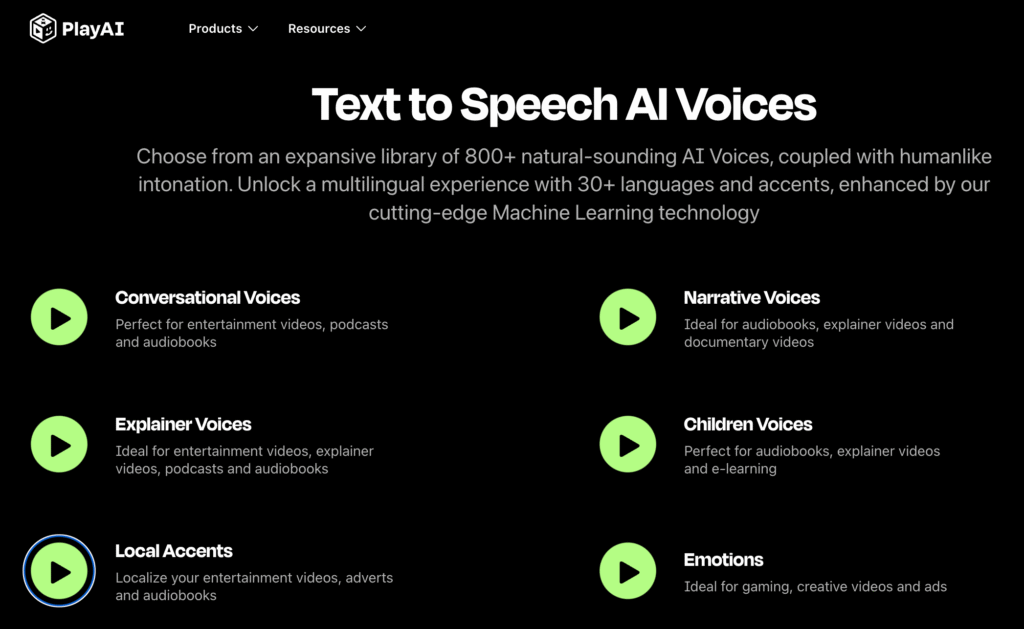
From a technical standpoint, Play.ht behaved more like a specialized narration engine than a full production suite. That focus is precisely why many creators adopted it — and why its absence is still felt in long-form creator workflows.
Murf AI is architected around a different technical philosophy. Rather than optimizing purely for narration, it integrates AI voice generation directly into a project-based production environment.
Voice generation is embedded inside timelines, media layers, and collaborative
workflows —
allowing teams to synchronize narration with slides, visuals, music, and review
cycles in one interface.
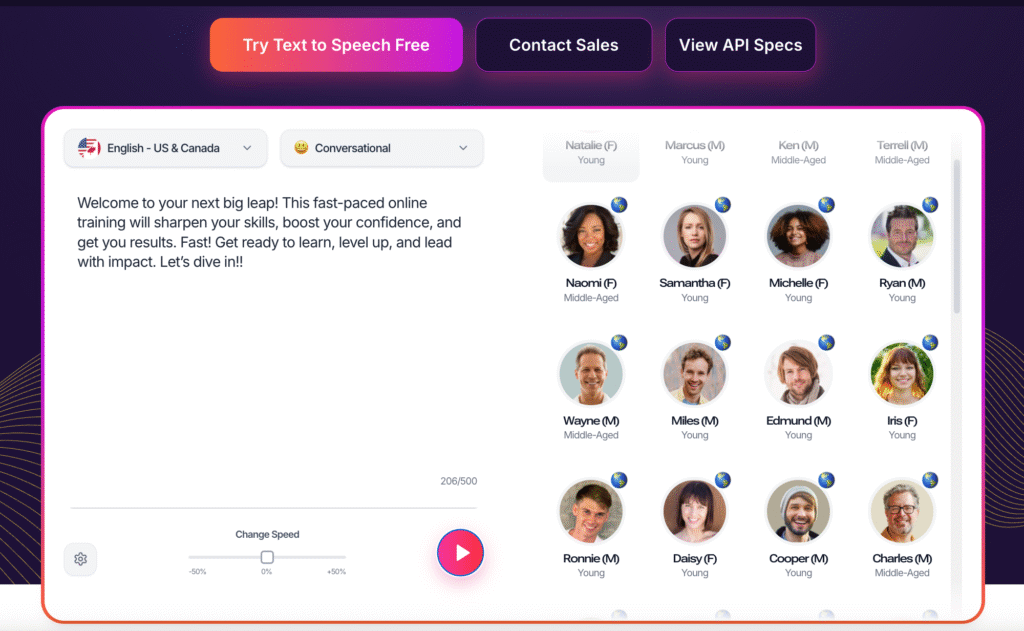
Technically, Murf AI feels less like a standalone TTS engine and more like a lightweight production suite where AI voices are one component of a broader system. This architecture aligns naturally with team-based, repeatable content production.
Historically, Play.ht delivered clear, neutral-to-friendly narration well suited for podcasts, audiobooks, and explainer content. Its voices prioritized intelligibility and long-form consistency over dramatic performance.
Murf AI’s voices are also natural-sounding, but intentionally tuned for business and training environments. They emphasize professionalism, stability, and brand safety rather than expressive storytelling.
What this means now: Creators who valued expressive narration tend to migrate toward
tools like ElevenLabs or Fish Audio, while Murf AI remains strong for controlled, professional delivery.
Play.ht offered moderate emotional variation depending on the voice, enough for light storytelling and engaging narration, but not designed for theatrical performance.
Murf AI intentionally limits emotional extremes. This reduces variability and risk,
which is advantageous in corporate communication, policy content, and training materials.
What this means now: If emotional range is a priority, former Play.ht users typically look elsewhere; if consistency and tone control matter more, Murf AI remains a strong choice.
Play.ht was widely adopted for audiobooks, long-form podcasts, and extended courses due to its stability across very long scripts.
Murf AI excels in long-form structured content — such as multi-module training programs,
onboarding sequences, and internal learning journeys — where narration is tightly aligned with visuals and slides.
What this means now: Long-form creators focused on audio-first formats need a dedicated narration engine, while organizations producing visual training benefit more from Murf’s studio model.
Play.ht’s workflow centered on script-level control: fast generation, pronunciation tuning,
and iterative audio refinement for solo creators.
Murf AI shifts the workflow upstream, embedding voice generation inside collaborative,
timeline-based projects with review and approval layers.
What this means now: Independent creators often prefer modular tools, while teams benefit from Murf’s integrated production model.
Play.ht historically offered wide language and accent variety, which appealed to creators experimenting with different audiences.
Murf AI’s multilingual support is designed for clarity, neutral tone, and professional delivery —
ideal for global training, onboarding, and customer education.
What this means now: Creative experimentation favors narration-first tools, while multilingual business content aligns well with Murf AI.
With Play.ht no longer available, pricing comparisons now focus on active platforms and how former Play.ht users can evaluate value when migrating to a new solution.
Historically, Play.ht was considered creator-friendly at the entry level, especially for long-form narration. Today, that value gap is filled by different tools depending on whether your priority is audio-first narration or team-based video production.
| Plan | Approx. Price | What You Get | Best For |
|---|---|---|---|
| Free | $0 | Limited projects and minutes to explore the studio | Testing the workflow & interface |
| Creator | ~$19/month | Core voices, limited hours of generation | Solo creators & freelancers |
| Business | ~$66/month | More hours, full studio features, collaboration tools | Training & marketing teams |
| Enterprise | Custom | Large-scale usage, governance, advanced rights | Corporate learning & large organizations |
Note: Pricing, plan structures, and licensing terms can change. Always verify current details on the official Murf AI website before committing.
Play.ht (Legacy): Historically delivered strong value for individual creators who needed
long-form stability, pronunciation control, and a narration-first workflow without relying on a full video studio.
That value proposition is now distributed across multiple modern tools.
Murf AI: Offers better value for teams and organizations producing structured training, onboarding, and marketing content. Its integrated studio and collaboration features justify the cost when multiple stakeholders are involved.
Practical migration insight: Former Play.ht users focused on pure narration typically migrate toward audio-first platforms such as ElevenLabs or Fish Audio. Creators producing visual training or slide-based content tend to transition more smoothly into Murf AI.
For former Play.ht users and independent creators focused on audiobooks, long-form narration,
courses, or explainer-style videos, the closest modern alternatives are now ElevenLabs and
Fish Audio. Both platforms inherit what made Play.ht valuable:
stable long-form output, strong voice quality, and narration-first workflows.
If you work inside a business, agency, or learning & development team, and your primary goal is to build structured training, onboarding, or corporate communication assets at scale, Murf AI remains the strongest option. Its integrated studio, collaboration tools, and production-oriented workflow align closely with how teams actually create and iterate on content.
Ultimately, the “best” platform now depends less on brand names and more on workflow orientation: audio-first creators benefit most from narration-focused tools, while video-first teams gain efficiency from studio-based systems.
Related comparisons you may find useful:
Historically, Play.ht was preferred by creators seeking flexible, narration-first voices, while Murf AI optimized for professional, business-safe delivery. Today, former Play.ht users typically migrate toward ElevenLabs or Fish Audio for comparable or superior voice realism.
Most independent YouTube creators now lean toward ElevenLabs or Fish Audio for narration-heavy channels. Creators producing business explainers, training, or slide-based videos often prefer Murf AI for its studio workflow.
Murf AI is generally the best option for corporate training, onboarding, and internal communication. Its studio environment, collaboration tools, and professional voices are tailored to these use cases.
Since Play.ht is no longer active, creators typically replace it with ElevenLabs or Fish Audio for narration, while continuing to use Murf AI for structured video and training workflows when needed.
For beginners focused on narration, ElevenLabs is often the easiest starting point. Murf AI remains beginner-friendly as well, but its full value appears when managing multi-scene or team-based projects.
Audio-first creators usually find better value with ElevenLabs or Fish Audio. Organizations producing high volumes of training or marketing content often justify Murf AI through workflow efficiency and collaboration.
Commercial use depends on the platform and plan. Murf AI generally supports commercial usage on paid tiers, and terms may vary for enterprise workflows and team licensing. For narration-first alternatives like ElevenLabs or Fish Audio, commercial rights can also vary by plan, voice type, and features like voice cloning. Always verify current licensing terms on the official product pages before publishing at scale.
For podcasts and serialized audio content in 2026, most former Play.ht users migrate toward
ElevenLabs or Fish Audio due to improved realism, better emotional control, and
long-form stability. If you’re producing podcast content that’s tightly synced to visuals or multi-scene video
workflows, Murf AI can still be useful — but it’s generally more “studio-first” than “audio-first.”
If you mostly work with slides, training decks, and structured video modules, Murf AI is usually the better fit because its studio workflow is designed for aligning narration with visuals, timelines, and review cycles. If you’re primarily producing audio-first narration (podcasts, audiobooks, long scripts), you’ll usually get better results with ElevenLabs or Fish Audio.
