Physical Address
304 North Cardinal St.
Dorchester Center, MA 02124
Physical Address
304 North Cardinal St.
Dorchester Center, MA 02124

Artificial intelligence has transformed how voiceovers are produced, allowing creators and businesses to generate professional narration without microphones, studios, or live voice actors. In this new landscape, two of the most talked-about tools in 2026 are ElevenLabs and Murf AI. Both sit in the high-end tier of AI voice generators, but they serve different needs and types of users.
ElevenLabs is known for emotionally rich, human-like delivery, which makes it a favorite among YouTube creators, storytellers, independent filmmakers, and automation channels that depend on engagement and narrative performance. Murf AI, on the other hand, has become a go-to solution for businesses, e-learning teams, HR departments, and corporate trainers that need scalable, brand-safe, and consistent voiceovers for training, onboarding, internal communications, and marketing videos. At Like2Byte, we tested both in real creator workflows and corporate-style projects to see how they behave beyond marketing pages.
Short answer: ElevenLabs is the better fit when emotional storytelling, viewer retention, and “actor-like” narration matter most. Murf AI is the stronger choice when you need long-form stability, a studio built for teams, and repeatable business workflows. In this 2026 comparison, we break down what we found in our tests across realism, emotional range, long-form performance, workflow, and pricing to help you choose the right tool for your channel or training library.
Before choosing between these tools, take a look at our comprehensive guide to the Top 10 Best AI Voice Generators for 2026.
To move beyond marketing claims, we evaluated ElevenLabs and Murf AI in the kinds of projects creators and teams actually ship. We created sample YouTube-style scripts, internal training modules, explainer videos, and automation-friendly workflows, then measured how each tool handled setup, generation speed, editing, and iteration.
In practice, this meant testing both platforms with long-form narration, slide-based content, and faceless video scripts. We looked at how stable the voices felt over time, how easy it was to fix pronunciation mistakes, and how well each platform fit into an existing stack with video editors, LMS platforms, and automation tools.
| Scenario | What We Tested | ElevenLabs Highlight | Murf AI Highlight |
|---|---|---|---|
| Faceless YouTube video | 10–15 minute narrative script with tension and reveals | Highly expressive delivery that kept the story engaging | Clear, neutral delivery suitable for business-style channels |
| Corporate training module | Multi-section onboarding or policy course | Engaging voice, but with more tonal variation over time | Very consistent tone across all lessons and sections |
| Automation workflow | Script-based generation for recurring content | Fast generation and easy integration into automated pipelines | Studio environment helpful when multiple people review content |
| Multilingual content | Same script rendered in different languages | Expressive multilingual narration for public-facing content | Professional, brand-safe style for training in multiple regions |
The insights in the comparison below are based on this hands-on testing. Rather than choosing a “winner in the abstract”, we focus on where each tool performs best in real creator and business workflows.
| Feature | ElevenLabs | Murf AI |
|---|---|---|
| Voice Realism | ★★★★★ Highly expressive | ★★★★☆ Natural, slightly more neutral |
| Best For | YouTube, storytelling, short-form content | Corporate videos, training, e-learning |
| Emotional Range | Very high | Moderate to high (more controlled) |
| Long-Form Stability | Moderate | Excellent |
| Editing & Studio Tools | Streamlined workflow | Full-featured studio for teams |
| Pricing Entry Point | Lower starting price | Higher, but optimized for teams |
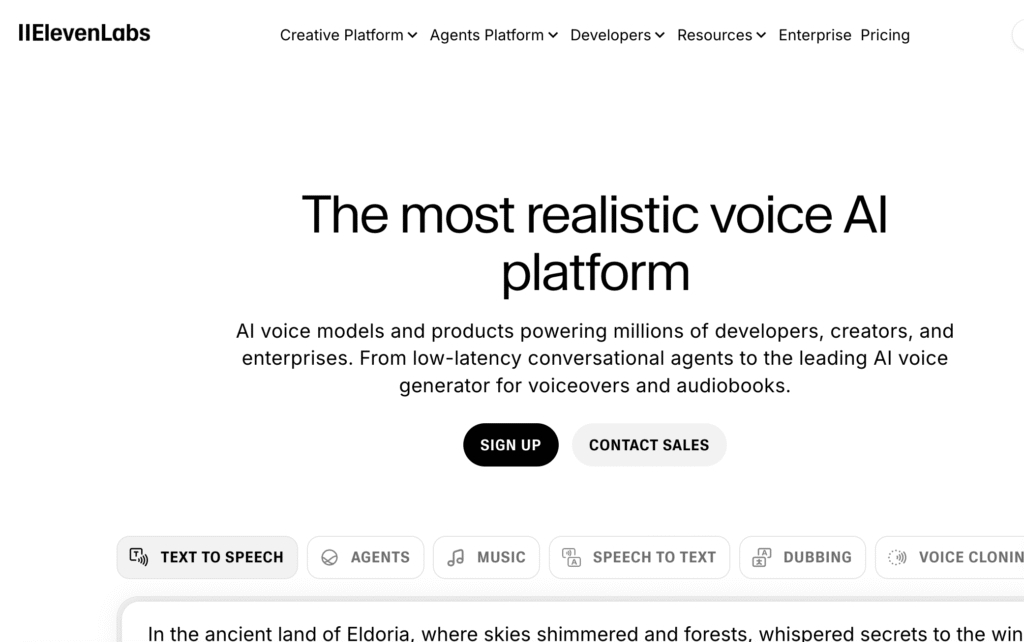
ElevenLabs was founded in 2022 by Piotr Dąbkowski, a former Google machine-learning engineer, and Mati Staniszewski, previously a strategist at Palantir. Their mission was to build AI voices that could match the nuance, emotion, and storytelling power of human voice actors—rather than just reading text clearly.
The platform gained rapid attention after its public beta in 2023, when creators and developers realized that ElevenLabs voices didn’t merely sound “less robotic”—they actually performed scripts with emotional subtext. Subtle pauses, emphasis on key phrases, and natural-sounding inflection made it ideal for videos, narration, and storytelling-heavy formats.
By 2026, ElevenLabs is widely seen as a benchmark for expressive AI narration. It powers everything from faceless YouTube documentaries and TikTok explainers to indie films, audiobooks, and educational content where emotional resonance and engagement are critical to success. In our tests with narrative scripts, it consistently felt closest to working with a human voice actor.
ElevenLabs introduced voice models that behave much closer to real human voice actors. Instead of simply mapping text to phonemes, its system simulates how a storyteller would naturally deliver a line, incorporating:
Why this matters: These micro-details are what make narration feel “alive”. Audiences don’t consciously analyze them, but they feel the difference in engagement. A realistic voice doesn’t just tell a story; it keeps people listening for longer.
Example: Imagine a YouTube documentary about a tech scandal. When the narrator slows down before a major reveal, or lowers their voice for a tense moment, it creates anticipation and emotional weight. ElevenLabs reproduces these patterns in a way that traditional TTS engines generally cannot, and we saw this clearly when comparing the same script across different platforms.
Between 2023 and 2025, YouTube automation exploded—channels producing faceless content in niches like finance, tech, history, mystery, and list-based entertainment needed voices that could be generated quickly but still sound human and engaging. ElevenLabs became the default choice because it delivered the best blend of speed, realism, and ease of use.
Creators often report noticeable improvements in viewer retention after switching from older TTS engines to ElevenLabs. On a platform where watch time and audience retention directly influence revenue and reach, this expressive performance becomes a competitive advantage rather than a cosmetic detail. In our own retention-focused tests, the more dynamic ElevenLabs voices felt noticeably better suited to storytelling formats.
ElevenLabs also benefited from strong community-driven adoption. Tech channels, AI enthusiasts, and automation creators published countless comparison videos, demos, and tutorials showcasing its voices. Over time, it became the “default reference point” whenever someone mentioned realistic AI narration, much like how Photoshop became shorthand for image editing.
This cultural momentum matters because tools that are widely known and widely tested tend to iterate faster, receive better feedback, and integrate more quickly into emerging content workflows.
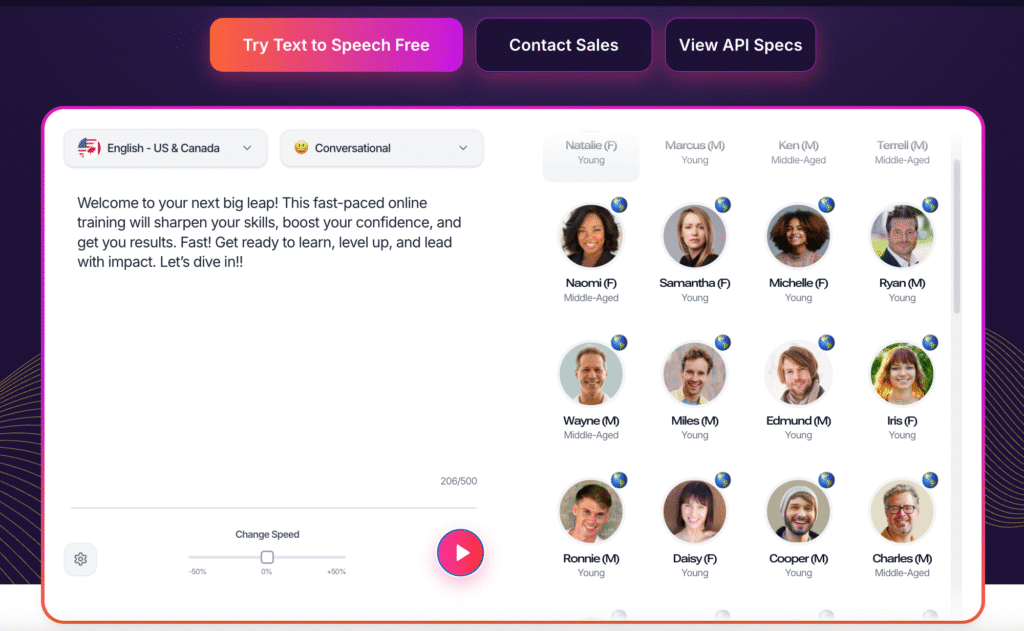
Murf AI is a cloud-based AI voice generator designed primarily for businesses, training teams, educators, and marketers who need professional voiceovers at scale. While ElevenLabs grew its reputation among individual creators and YouTube automation channels, Murf carved out a strong position in the corporate and e-learning world.
Instead of focusing first on content creators, Murf AI framed itself as a solution for teams creating training videos, HR communications, explainer content, product demos, internal presentations, and marketing materials. Its platform includes not just voices, but a full studio experience with timelines, media support, team collaboration features, and integrations with popular tools used by corporate teams.
In 2026, Murf AI is widely used by organizations that want to cut the cost and time of traditional voiceover production while keeping narration polished, brand-safe, and consistent with corporate communication standards. In our tests with structured training content, its studio model made it easy to keep projects organized and aligned with brand guidelines.
Murf AI’s core use case is corporate content. Training videos, onboarding modules, compliance explainers, safety tutorials, and internal communications all benefit from a voice that is clear, consistent, and professional. Unlike YouTube storytelling, these formats prioritize trust, clarity, and structure over dramatic emotion.
Example: A company rolling out a new HR policy needs a 20-minute explainer video for employees in multiple regions. Murf AI allows the team to generate neutral, professional narration in different languages, keeping tone aligned with the company’s brand voice across every region.
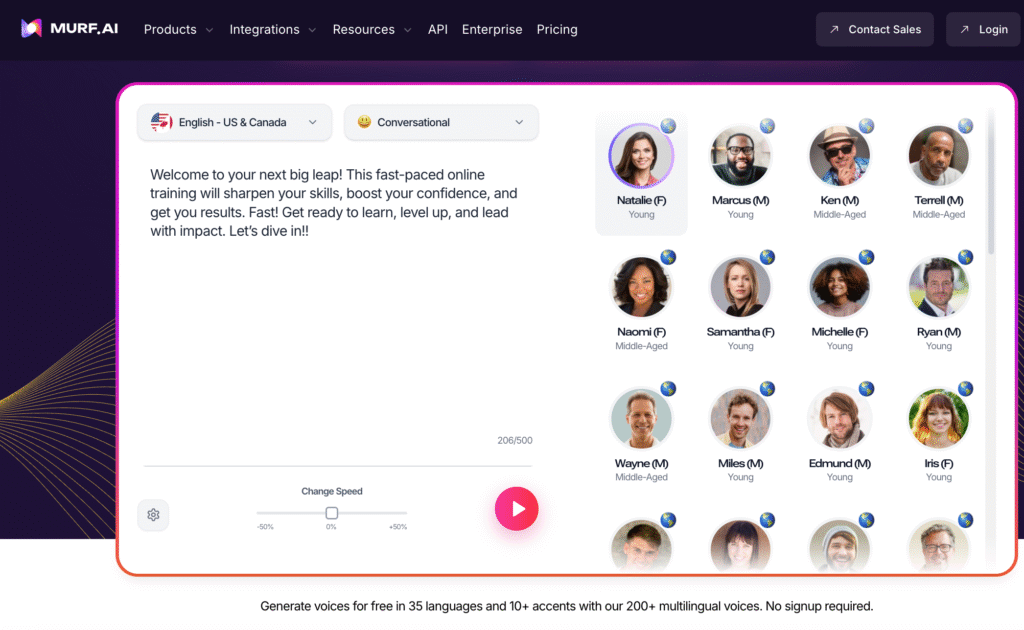
Murf AI behaves less like a simple “text box and play button” and more like a full production studio in the browser. Users can work with timelines, upload visuals, adjust sync between slide content and voiceover, manage multiple tracks, and invite collaborators to the same project.
This makes Murf AI ideal for L&D (Learning & Development) teams, agencies, or marketing departments working on recurring training series or campaign assets. Instead of stitching everything together across separate tools, much of the workflow happens inside Murf itself.
Murf AI offers a large library of voices across languages, accents, ages, and tonal styles. While many of these voices are not as emotionally dramatic as ElevenLabs, they are intentionally tuned for corporate and educational scenarios: friendly but not overly casual, professional but not monotonous.
For companies that need multiple voices for different types of content—such as a narrator voice for training, another for product videos, and another for brand storytelling—Murf provides a curated selection that is ready for business use out of the box.
ElevenLabs’ models focus heavily on expressive speech modeling. They simulate how human storytellers naturally vary pitch, tempo, emphasis, and energy based on context. This results in narration that feels organic and emotionally responsive, making it ideal for content where performance and personality drive results, such as YouTube videos, narrative podcasts, and storytelling-heavy ads.
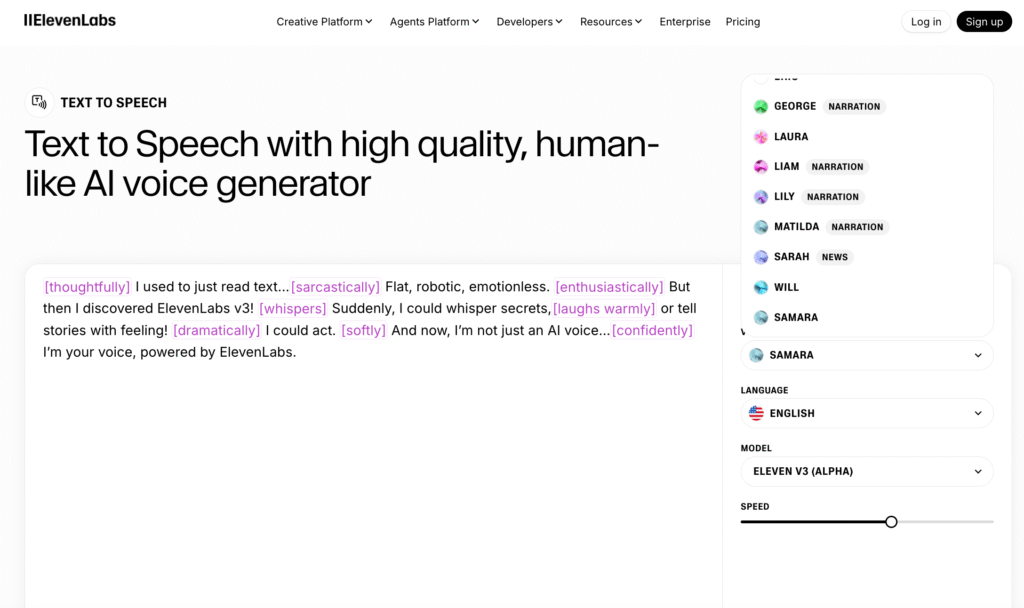
Murf AI’s architecture is optimized for stability and editorial control. While its voices still sound natural, the priority is consistency across long scripts and across multiple projects. Combined with its studio tools—such as timing control, emphasis adjustments, and pronunciation editing—this makes Murf especially suitable for long-form, repeatable formats like training series, onboarding journeys, and e-learning courses.
ElevenLabs approaches narration like a voice actor performing a script. Its models introduce emotion, subtle shifts in intensity, and context-aware timing that make speeches, stories, and explainers feel truly alive. This level of expressiveness is especially powerful for content where narrative impact directly influences performance, such as documentaries, mystery videos, and personal storytelling.
Murf AI also offers natural-sounding voices, but they are designed to stay within a narrower emotional band. The goal is not to create theatrical narration, but to maintain a professional, polished tone suitable for corporate environments. The result is audio that feels clear, steady, and trustworthy, even if it’s slightly less expressive than ElevenLabs.
Winner: ElevenLabs, for projects where emotional realism and narrative impact are the top priorities.
Emotional range affects how well a tool can switch between moods—curious, serious, tense, enthusiastic—within the same script. ElevenLabs stands out here, as its voices can adapt dynamically to the story’s tone and context. That makes it ideal for scripts that move between excitement, tension, and reflection.
Murf AI offers multiple voice styles and tones, but its emotional spectrum is generally more controlled. It is designed to sound professional and aligned with brand expectations rather than highly dramatic. This is exactly what many companies want—voiceovers that don’t overshadow the content, but support it.
Winner: ElevenLabs, for creators who need cinematic or narrative-style delivery. Murf AI is strong for professional, balanced tone rather than dramatic shifts.
Long-form performance is where differences in design philosophy become very clear. Over 30–60 minutes of narration, minor variations in tone or pacing can either make content feel human—or distract the listener.
Murf AI is built to excel in this scenario. Its voices are tuned for consistency, so the tone at minute 45 sounds like the tone at minute 5. For corporate training, compliance courses, or multi-chapter e-learning sequences, this predictability is a major advantage.
ElevenLabs, because it behaves more like a performer, can introduce small differences in tone or pacing across long passages. For storytelling, this is often a strength. For strict learning modules where uniform delivery is preferred, it can be less ideal.
Winner: Murf AI, for long-form, structured narration where tonal consistency is critical.
Both platforms support multiple languages, but their strengths differ. ElevenLabs is especially strong in multilingual expressiveness, with voices that adapt prosody and rhythm to each language, making narration sound natural rather than just translated.
Murf AI also offers a broad language range and many accents, particularly valuable for international businesses creating training and marketing content across multiple regions. Its focus, however, remains on clarity and professionalism rather than emotional richness in each language.
Winner: ElevenLabs for emotionally engaging multilingual storytelling; Murf AI for multilingual business and training content that prioritizes clarity and consistency.
ElevenLabs keeps its workflow intentionally simple: paste text, choose a voice, tune a few parameters, and generate. It also integrates well with automated content pipelines, making it appealing for solo creators and small teams who value speed and ease of use above all.
Murf AI behaves more like a full production environment. In Murf Studio, users can:
For L&D, HR, or marketing teams working on recurring video series, this studio approach is often more valuable than raw expressiveness, because it reduces friction in the overall production pipeline.
Winner: Murf AI, for teams and professional production workflows; ElevenLabs, for fast solo creation and automation.
Pricing is structured differently across both tools and tends to reflect their target users. ElevenLabs offers a lower entry price, making it attractive to individual creators and small channels. Murf AI’s plans start higher, but they are clearly geared toward teams and business use, where content volume and collaboration matter more.
| Plan | Approx. Price | What You Get | Best For |
|---|---|---|---|
| Free | $0 | Limited monthly characters, basic access to voices | Testing & hobby projects |
| Starter | ~$10/month | More characters, high-quality voices, basic cloning | YouTube & short-form creators |
| Creator | ~$22/month | Higher limits, advanced voices, faster generation | Medium-volume content workflows |
| Pro | $99+/month | Large-scale generation, professional cloning, commercial usage | Agencies & high-output teams |
| Plan | Approx. Price | What You Get | Best For |
|---|---|---|---|
| Free | $0 | Limited projects and minutes for testing | Trying the studio & voices |
| Creator | ~$19/month | Access to core voices, limited hours of generation | Solo creators & freelancers |
| Business | ~$66/month | More hours, full studio access, better support | Training, marketing & SMB teams |
| Enterprise | Custom | Large-scale usage, advanced controls, team features | Corporate learning & large organizations |
ElevenLabs generally offers better value for solo creators, YouTube channels, and smaller teams that want highly expressive voices at a relatively low entry cost. It’s especially compelling if your content depends on emotional narration or if you produce a lot of short-to-medium length videos.
Murf AI offers stronger value in business contexts where multiple stakeholders collaborate, projects are recurring, and long-form training or marketing content is produced consistently. Its studio environment and team-oriented pricing become more cost-effective as your production volume and organizational complexity increase.
Note: Pricing, plan names, and included features may change over time. Always check the official pricing pages at ElevenLabs and Murf AI for the most up-to-date information.
| Use Case | Best Platform |
|---|---|
| Faceless YouTube channels & storytelling | ElevenLabs |
| Short-form, narrative-heavy content | ElevenLabs |
| Corporate training & employee onboarding | Murf AI |
| HR, compliance & internal comms videos | Murf AI |
| Multilingual brand storytelling | ElevenLabs |
| Large e-learning libraries & business courses | Murf AI |
If your success depends on emotional connection, storytelling, and viewer retention—especially on platforms like YouTube—ElevenLabs is the stronger choice. Its voices feel more like real performers, giving your content a cinematic quality that keeps audiences listening longer.
If your primary goal is to build structured, repeatable, and scalable business content—like training modules, onboarding series, HR communications, or multilingual corporate videos—Murf AI offers a better alignment with that reality. Its studio tools, team features, and long-form stability are designed for exactly this environment.
For many professionals, the most powerful strategy is not choosing one over the other, but using both: ElevenLabs for expressive storytelling where performance matters, and Murf AI for business content where clarity, consistency, and collaboration are essential.
If you are comparing AI voice tools, here are additional related articles you may want to review:
ElevenLabs generally sounds more human and expressive, especially in narrative or storytelling contexts. It captures subtle emotional cues and timing that closely resemble a professional voice actor. Murf AI also delivers natural-sounding voices, but they are tuned for clarity and professionalism rather than dramatic expressiveness.
Murf AI is better suited for long-form material. Its voices and studio tools are designed for consistent delivery over long durations, making it ideal for courses, onboarding journeys, and internal training content. ElevenLabs can be used for long-form projects, but its expressive nature may introduce more tonal variation across extended scripts.
ElevenLabs is the preferred option for YouTube automation and faceless channels. Its expressive voices help maintain viewer interest, increase retention, and give videos a premium feel without requiring human recording sessions. Murf AI can certainly be used for YouTube, but its strengths shine more in corporate and training scenarios.
Murf AI offers a more advanced studio experience, especially for teams. You can manage timelines, align visuals with narration, edit at the sentence level, adjust timing, and collaborate inside the same project. ElevenLabs keeps things lean and fast, which works well for solo creators but doesn’t provide the same depth of project-level control.
If your focus is emotionally engaging, narrative-style multilingual content, ElevenLabs tends to have the edge with more expressive multilingual voices. If your focus is multilingual corporate materials—like training or product explainers—Murf AI offers strong clarity and consistency across languages, which many businesses prefer.
ElevenLabs is typically easier for beginners who just want to paste a script, pick a voice, and generate professional audio quickly. Murf AI is also user-friendly, but its studio and team features really shine when you are producing more complex projects or working within a corporate environment.
Yes. Many professionals use both. A common approach is to use ElevenLabs for customer-facing or public storytelling content (YouTube, promos, narrative videos) and Murf AI for internal or structured content (training, onboarding, internal comms). This allows you to match the right voice engine to the right job.
Both ElevenLabs and Murf AI offer commercial usage on their paid plans, but the exact terms can vary depending on plan level, voice cloning, and distribution. Always check the licensing details on the official websites before using generated audio at scale in public or commercial projects.
For solo creators and smaller channels, ElevenLabs is usually more cost-effective thanks to its lower entry pricing and strong performance on short-form content. For organizations producing ongoing training content or working across teams, Murf AI often becomes more economical due to its studio tools, collaboration features, and long-form efficiency.
Start by asking what matters more for your current projects: emotional storytelling or structured business communication. If you need voices that behave like actors and drive engagement, choose ElevenLabs. If you need a stable, collaborative environment for training, onboarding, and corporate videos, lean toward Murf AI. If both needs are important, consider adopting both tools and using each where it makes the biggest impact.